
Heavy metal toxicity happens when harmful metals like lead, mercury, arsenic, or cadmium accumulate in your body over time. This can cause a wide range of symptoms, from fatigue and brain fog to serious organ damage if not addressed. Common sources include contaminated water, high-mercury fish, older homes, industrial sites, and some imported goods.
Key Symptoms to Watch For:
- Energy Issues: Chronic fatigue, weakness, drowsiness
- Cognitive Problems: Brain fog, memory trouble, tingling in hands/feet
- Digestive Discomfort: Nausea, abdominal pain, constipation/diarrhea
- Mood Changes: Anxiety, depression, irritability
- Other Signs: High blood pressure, metallic taste, skin rashes
If you notice persistent patterns of these symptoms, especially with known exposure risks, consult a healthcare provider. Testing options include blood, urine, or hair analysis. Treatments like IV chelation therapy may help remove toxic metals but must be done under medical supervision to avoid further complications. Early diagnosis is key to preventing long-term health issues.
Top 10 Warning Signs of Heavy Metal Toxicity (FULL DETOX PROTOCOL)
Common Symptoms of Heavy Metal Toxicity
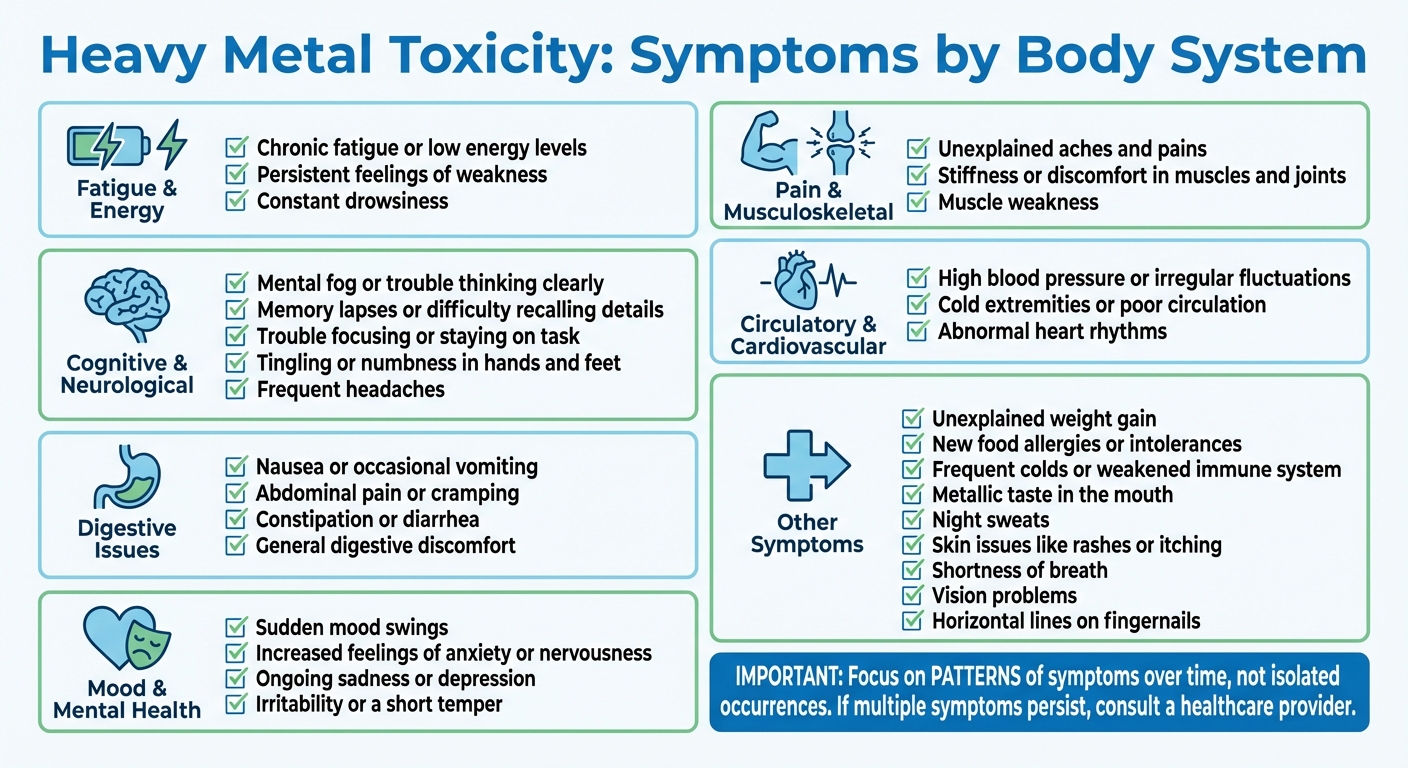
Heavy Metal Toxicity Symptoms Checklist by Body System
Heavy metal toxicity can present with a mix of symptoms that often overlap, making it tricky to pinpoint the cause. Issues like fatigue, brain fog, or digestive discomfort are frequently mistaken for other conditions. Below is a simple guide to help recognize common signs.
It’s important to note that a single headache or moment of nausea doesn’t automatically point to heavy metal toxicity. However, persistent or worsening symptoms should be taken seriously.
The focus should be on patterns of symptoms rather than isolated occurrences. Since heavy metals accumulate in the body gradually, symptoms tend to develop over time instead of appearing suddenly. Keeping track of recurring health issues can help identify potential long-term exposure.
General Symptom Checklist
Here’s a detailed list of symptoms often linked to heavy metal toxicity. If you notice several of these symptoms sticking around, it’s worth discussing heavy metal testing with your doctor:
Fatigue & Energy:
- Chronic fatigue or low energy levels
- Persistent feelings of weakness
- Constant drowsiness
Cognitive & Neurological:
- Mental fog or trouble thinking clearly
- Memory lapses or difficulty recalling details
- Trouble focusing or staying on task
- Tingling or numbness in hands and feet
- Frequent headaches
Digestive Issues:
- Nausea or occasional vomiting
- Abdominal pain or cramping
- Constipation or diarrhea
- General digestive discomfort
Mood & Mental Health:
- Sudden mood swings
- Increased feelings of anxiety or nervousness
- Ongoing sadness or depression
- Irritability or a short temper
Pain & Musculoskeletal:
- Unexplained aches and pains
- Stiffness or discomfort in muscles and joints
- Muscle weakness
Circulatory & Cardiovascular:
- High blood pressure or irregular fluctuations
- Cold extremities or poor circulation
- Abnormal heart rhythms
Other Symptoms:
- Unexplained weight gain
- New food allergies or intolerances
- Frequent colds or a weakened immune system
- Metallic taste in the mouth
- Night sweats
- Skin issues like rashes or itching
- Shortness of breath
- Vision problems
- Horizontal lines on fingernails
Keep in mind that these symptoms can also indicate other medical conditions. If multiple symptoms persist over time, especially alongside known exposure risks, it’s essential to consult a healthcare provider to explore testing for heavy metal exposure.
Symptoms by Metal Type
Building on the general symptom checklist, this section breaks down metal-specific symptoms, offering a more focused approach to identifying potential toxic exposures. While many heavy metal symptoms overlap, certain metals trigger distinct warning signs that can help pinpoint the source of exposure. These insights can guide conversations with your healthcare provider about targeted testing and treatment.
Lead Toxicity Symptoms
Lead poisoning often goes unnoticed until blood lead levels are dangerously high. Even at low levels, lead exposure can harm health, particularly in children, where the risk includes irreversible damage to brain development.
Children may show symptoms such as developmental delays, learning difficulties, irritability, fatigue, hearing loss, seizures, speech problems, lower IQ, trouble focusing, poor school performance, loss of appetite, abdominal pain, vomiting, constipation, weight loss, and pale skin.
Adults often experience memory and concentration issues, persistent headaches, mood disorders (like depression, anxiety, or hostility), abdominal pain, nausea, constipation, high blood pressure, joint and muscle pain, chronic fatigue, peripheral neuropathy, cognitive impairment, weakness, convulsions, nerve damage, and a bluish line at the base of the gums.
If you suspect lead exposure for yourself or your children, consult your healthcare provider about a blood lead test. For acute poisoning cases, contact Poison Control immediately.
Mercury Toxicity Symptoms
Mercury poisoning primarily affects the nervous system. Inhaled elemental mercury vapor easily crosses the blood-brain barrier and placenta, making pregnant women particularly vulnerable as it can lodge in the fetal brain.
Key signs include coordination problems, speech and hearing difficulties, nerve damage in the hands and face, vision changes, muscle weakness, tremors, mood swings, cognitive disturbances, and sensory impairments. Mercury disrupts cellular processes at the protein level, and deposits in the central nervous system can persist for years due to its long half-life.
Children and fetuses are especially at risk, with exposure potentially leading to developmental delays and severe neurological damage. For methylmercury, the excretory half-life in humans is about 70 days, with most of it eliminated through stool.
Arsenic, Cadmium, and Other Metal Symptoms
Arsenic poisoning often presents with distinctive skin changes, such as redness, swelling, wart-like spots, hardened areas on the palms and soles, unusual darkening, and Mees’ lines (white bands on the fingernails). Additional symptoms include a garlic-like odor on the breath, nausea, bloody diarrhea, abdominal pain, headaches, drowsiness, confusion, seizures, brain damage, peripheral neuropathy, muscle cramps, weakness, irregular heart rhythms, and low blood pressure.
Cadmium exposure is closely tied to respiratory issues. Symptoms include fever, muscle pain, gastrointestinal problems (nausea, abdominal pain, vomiting, diarrhea), high blood pressure, heart palpitations, irregular rhythms, weakened or abnormally formed bones in children, kidney and liver damage, and an increased risk of cancer.
Other metals like thallium and chromium can lead to kidney damage and hair loss. Recognizing symptom patterns alongside known exposure risks is key to determining when professional testing is necessary.
sbb-itb-d9e542d
When to Consider IV Therapy for Detoxification
If you’re dealing with lingering symptoms like fatigue, brain fog, muscle pain, headaches, mood swings, or neurological issues such as tingling and numbness, it might be worth exploring the possibility of heavy metal toxicity. These symptoms often overlap with other chronic conditions like hypothyroidism or depression, which can make pinpointing the cause tricky without proper lab tests. To confirm toxic metal levels, tests like blood, urine, or hair analysis are available, typically costing around $200–$300.
Once testing confirms toxicity, IV therapy may be an option to consider. For severe cases, IV chelation therapy is often recommended. This involves administering chelating agents intravenously, which bind to toxic metals and help your body safely eliminate them. At Kinnection Clinic, for example, IV therapy sessions often include EDTA, an FDA-approved chelating agent specifically for lead toxicity. These sessions are typically supplemented with nutrients like vitamin C, B complex, and magnesium. Each session lasts about 30–40 minutes, with a standard treatment plan involving 2–3 sessions per week for a total of 10 treatments. After completing the protocol, your condition is re-evaluated to assess progress.
"These chelating agents are usually given to people with severe heavy metal poisoning through an IV that places a small needle into your vein to slowly distribute the medicine into your body." – Cleveland Clinic
It’s important to note that supervision during this therapy is critical. Chelating agents don’t just bind to toxic metals – they can also remove essential minerals like calcium, which might lead to deficiencies. The process comes with risks, including allergic reactions, kidney damage, and low blood pressure, so healthcare providers will closely monitor your response throughout the treatment. Keep in mind, symptom improvement varies from person to person, making ongoing monitoring essential as you move forward with your detox plan.
If you suspect acute heavy metal poisoning with severe symptoms, seek immediate help by contacting Poison Control or heading to the emergency room. For chronic, low-level exposure, consult a qualified physician who can guide you through appropriate testing and create a tailored detoxification plan.
Next Steps
If you’ve identified several symptoms from this list, it’s crucial to seek professional medical care right away. Heavy metal toxicity can lead to permanent organ damage if left untreated, making early diagnosis essential. As StatPearls explains, "If detected and treated early, the prognosis is good. Delayed diagnosis and serious toxicity translate to a bad prognosis".
The first step is accurate testing. Confirm exposure through reliable laboratory tests rather than using at-home testing kits, which are often unreliable. A qualified healthcare provider can order the right tests and provide an accurate interpretation of the results.
If lab tests confirm heavy metal toxicity, discuss treatment options with your doctor, including medically supervised IV therapy. Clinics like Kinnection Clinic offer IV chelation therapy, which must be conducted under strict medical supervision to safely remove toxic metals. It’s important to note that the FDA advises against over-the-counter chelation products due to potential risks. Following these steps ensures a safer and more effective detox process.
For expert care, visit kinnectionclinic.com to schedule a consultation and address your symptoms promptly.
FAQs
What are the main ways people are exposed to heavy metals?
In the United States, exposure to heavy metals can come from a variety of everyday sources. Food and water are among the most common. For instance, fish and seafood often contain mercury, while produce or water may become contaminated through polluted soil. Environmental factors also play a role, with industrial emissions, smog, and contaminated groundwater being significant contributors. Even household items can be a source – think of old lead-based paint, aging plumbing systems, or certain cosmetics and personal-care products that may contain trace metals.
Certain professions carry an even higher risk. Jobs in mining, metalworking, or battery manufacturing can expose workers to elevated levels of heavy metals. Additionally, medical and dental materials, such as older silver dental fillings, may also contribute to metal exposure.
If you’re concerned about heavy metal exposure and are noticing symptoms, Kinnection Clinic provides IV chelation therapy as part of a tailored functional medicine plan designed to help reduce metal toxicity and promote better health.
What are the key symptoms of heavy metal toxicity, and how can I tell them apart from other conditions?
Heavy metal toxicity often disguises itself as other health problems, making it challenging to pinpoint. Symptoms like fatigue, brain fog, headaches, mood swings, digestive troubles, and joint pain overlap with issues such as thyroid disorders or autoimmune diseases. However, there are some distinctive signs that might hint at heavy metal exposure. These include a persistent metallic taste in the mouth, sore or receding gums, unexplained skin rashes, cold hands or feet, and a history of exposure to risks like lead-based paint, contaminated water, or working with metals.
If you’re experiencing several of these symptoms – especially the metallic taste or gum changes – it’s a good idea to consult a healthcare provider. They might suggest tests like blood, urine, or hair analysis to check for elevated levels of metals like lead, mercury, or arsenic. Should toxicity be confirmed, treatments such as IV detox protocols or chelation therapy can help. Clinics like Kinnection Clinic specialize in personalized IV therapy and functional medicine approaches to address heavy metal toxicity and other factors contributing to your symptoms.
What is IV chelation therapy, and is it safe for heavy metal detoxification?
IV chelation therapy is a treatment aimed at removing heavy metals from the body. It involves administering chelating agents through an intravenous (IV) drip. These agents work by binding to heavy metals in the bloodstream, making it easier for the body to eliminate them.
While generally safe when performed by a qualified healthcare provider, this therapy requires close supervision. Proper dosing is crucial to avoid potential issues like dehydration, low mineral levels, or allergic reactions. If you’re considering IV chelation therapy, it’s essential to consult a licensed medical professional to determine if it’s suitable for your health needs and to ensure the procedure is handled safely.