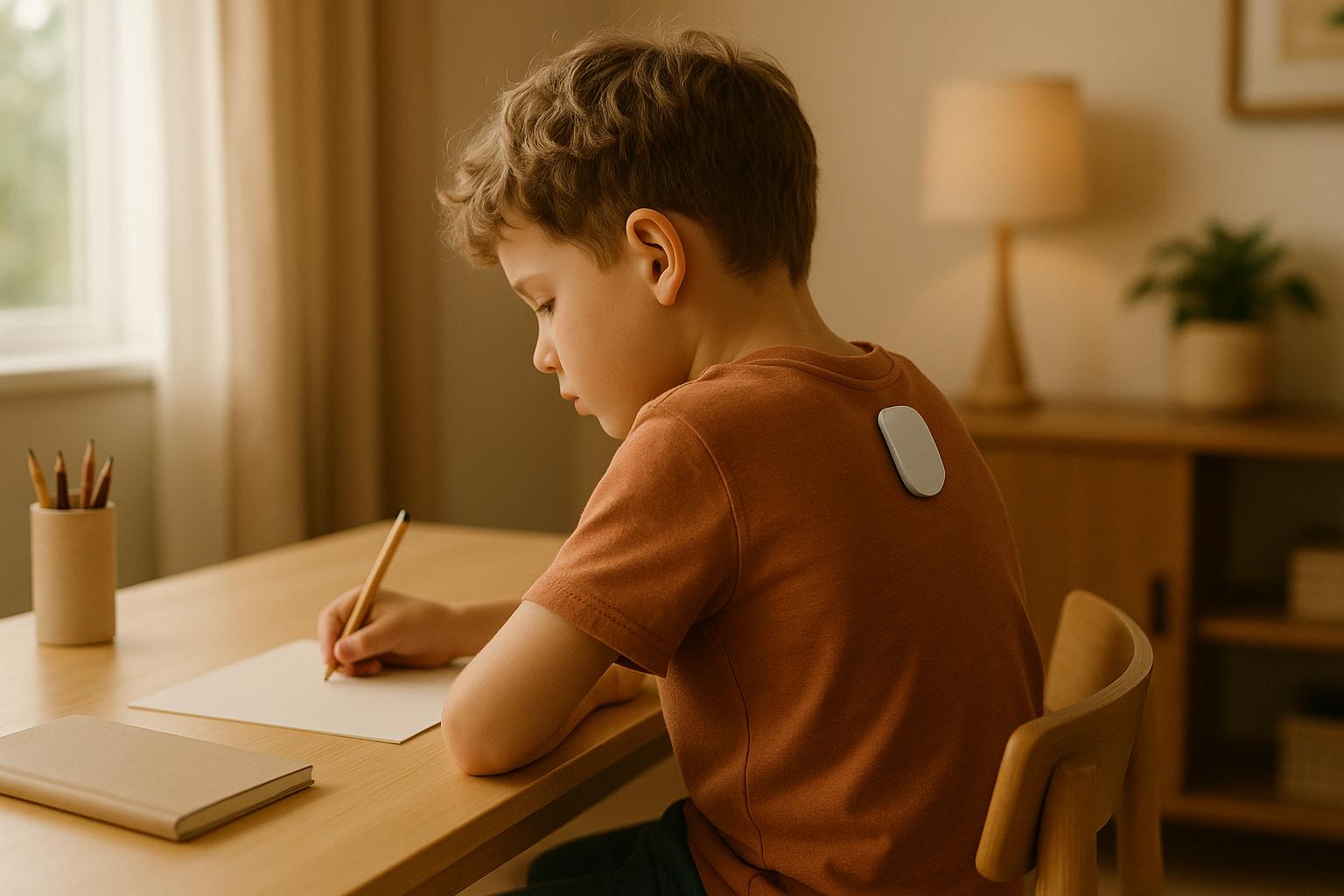
Wearable devices are helping address poor posture in children caused by excessive screen time and sedentary habits. These gadgets, like ActiGraph and Fitbit, monitor sitting, standing, and movement, providing real-time alerts to correct slouching. Poor posture in kids can lead to chronic neck and back pain, spinal issues, and reduced physical performance. Early intervention is key to preventing long-term health problems.
Key Takeaways:
- Problem: 20–40% of U.S. children show signs of forward head posture due to prolonged screen use.
- Solution: Wearables use sensors to track posture and activity, offering data to parents and healthcare providers.
- Accuracy: ActiGraph excels in posture detection (e.g., 83.8% for standing), while Fitbit encourages activity but is less precise for posture.
- Challenges: Wearables struggle with sitting detection (25–50% accuracy) and consistent use by children due to discomfort or design.
Wearables are not perfect but are useful for identifying patterns and promoting healthier habits when combined with professional care.
Recent Studies on Wearable Devices for Posture Monitoring
Researchers have been diving deep into the effectiveness of wearable devices for tracking children’s posture. Two brands that frequently show up in studies focused on youth health are ActiGraph and Fitbit. These devices are used to monitor how kids sit, stand, and move throughout the day – key factors that influence spinal health. The research provides insights into how these devices perform and how they could be applied in everyday life.
ActiGraph and Posture Detection in Children

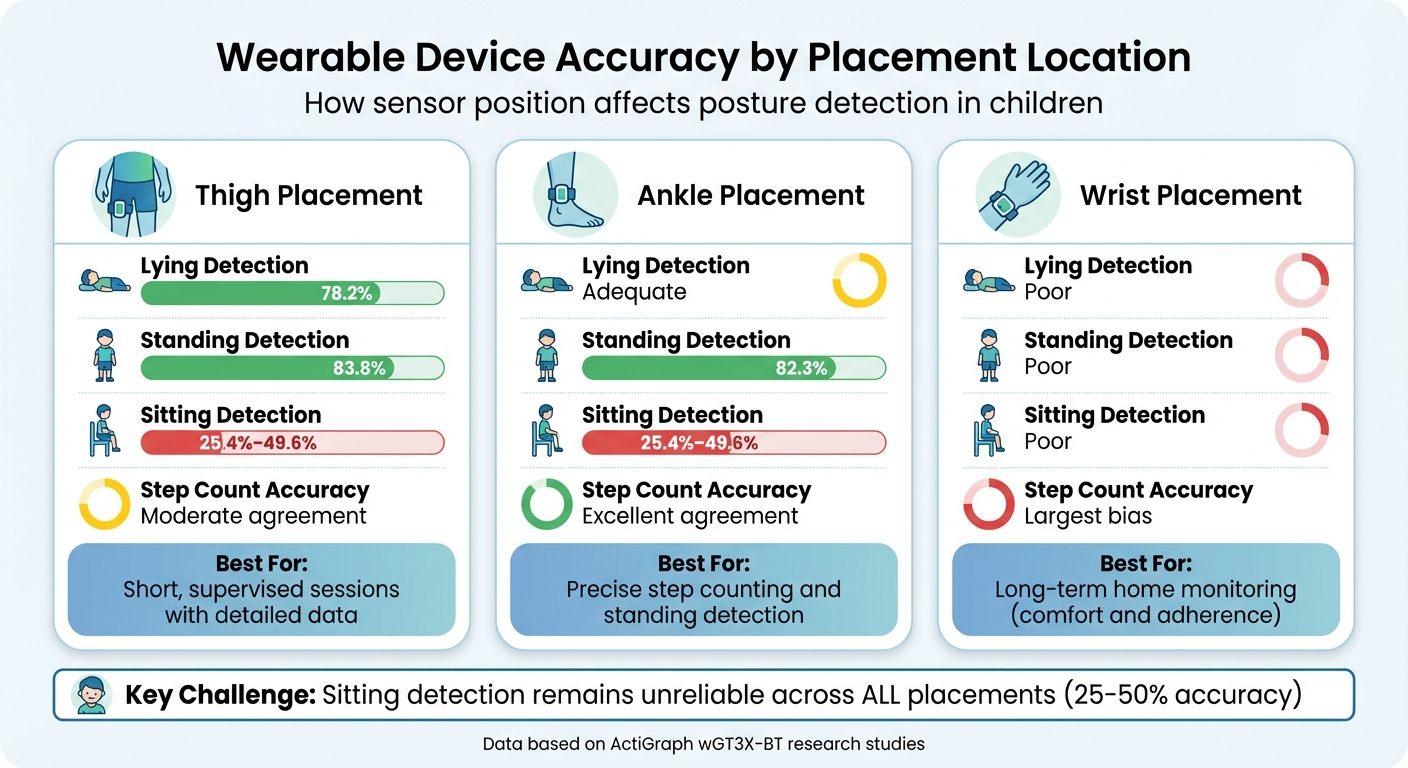
The ActiGraph wGT3X-BT has become a favorite among researchers for gathering precise data on children’s posture. When worn on the thigh, it detects lying down with 78.2% accuracy and standing with 83.8% accuracy. Similarly, when placed on the ankle, it measures standing at 82.3% accuracy and reliably counts steps, though its performance in identifying sitting is less consistent, ranging between 25.4% and 49.6%.
ActiGraph devices excel at capturing detailed movement patterns, even picking up on subtle posture differences. For example, in a two-week study involving 17 children with sensory sensitivities and 18 without, researchers used the ActiGraph GT9X to analyze continuous activity data through machine learning. They were able to distinguish between the two groups with an impressive 84.1% accuracy. This highlights how sensitive these devices are to detecting nuanced differences in how children move and maintain posture throughout their day.
Fitbit Studies on Child Activity Monitoring

While ActiGraph focuses on precision, Fitbit studies lean more toward practicality and encouraging activity. Across 18 studies, Fitbit devices were shown to increase moderate-to-vigorous physical activity and reduce the amount of time kids spent sitting. This is important for posture, as more movement throughout the day helps prevent muscle imbalances and postural issues caused by prolonged sitting.
Fitbit’s appeal lies in its user-friendly design. Kids and teens are more likely to wear wrist-based devices that are comfortable and stylish, which leads to better long-term use compared to devices worn on other body parts. Although Fitbit may not deliver the same level of detail as ActiGraph when it comes to posture-specific data, its ability to motivate children to stay active makes it a powerful tool for promoting healthier habits. By encouraging more physical activity, Fitbit devices help mitigate the risks of poor posture associated with sedentary lifestyles.
New Applications of Wearables for Children’s Health
Wearables are no longer limited to tracking posture – they now play a larger role in monitoring various aspects of children’s health. From sensory processing and gait to sleep cycles and neurological conditions, these devices provide a window into how children move, rest, and interact with their environment in everyday life. This continuous, real-world data offers families and clinicians a clearer picture of a child’s overall well-being.
Sensory and Gait Monitoring in Children
Devices like the ActiGraph GT9X are making strides in understanding sensory sensitivities in children. By detecting subtle movement patterns that might go unnoticed during a quick office visit, these wearables help identify how children with sensory processing challenges navigate their daily lives.
For children experiencing gait issues or foot pain, tools such as Physilog 5 and G-Walk are invaluable. They measure stride metrics in natural settings, while smartphone-based wearables track dynamic foot posture over time. This kind of continuous monitoring allows specialists to design personalized rehabilitation plans based on how kids actually move in their day-to-day activities.
In pediatric neurology, wearables have proven useful for conditions like cerebral palsy, epilepsy, autism spectrum disorder, and neuromuscular challenges. These devices can track step counts, monitor movement symmetry, detect seizure activity, and identify repetitive behaviors – all from the comfort of a child’s home. This constant stream of objective data reduces the need for frequent clinic visits and can highlight gradual changes or emerging issues that might otherwise go unnoticed.
The scope of wearables is also expanding to include multiple areas of health. Recent studies leverage linked apps and questionnaires to monitor sleep patterns, screen time, diet quality, and mood. This integrated approach acknowledges that a child’s health is influenced by how these daily habits interact. By combining these insights with posture tracking, wearables are becoming key tools in supporting the overall wellness of children and their families.
Challenges and Limitations of Wearable Devices
Wearable Device Accuracy Comparison for Children’s Posture Monitoring
Wearable devices come with a set of challenges, particularly when it comes to data accuracy, consistent use by children, and practical factors like battery life and durability. Understanding these hurdles helps manage expectations about what these devices can realistically achieve. Below, we’ll dive into how sensor placement and adherence impact their effectiveness.
Accuracy and Device Placement
Where a wearable is placed on the body significantly affects its ability to detect posture. Studies comparing placements show that sensors on the thigh and ankle perform better than wrist-worn devices in identifying whether a child is lying down, sitting, or standing. Wrist devices, while popular for their watch-like design, tend to be the least accurate for posture detection and step counting.
One key challenge is sitting detection, which remains unreliable across all placements, with accuracy ranging between 25% and 50%. This is because sitting postures vary widely – legs may be crossed, stretched out, or tucked under – which makes it hard for sensors to differentiate between sitting and other positions. Additionally, elastic bands can shift during movements like transitioning from lying to sitting, further skewing the data.
| Placement | Lying Detection | Standing Detection | Sitting Detection | Step Count Accuracy |
|---|---|---|---|---|
| Thigh | 78.2% | 83.8% | 25.4%–49.6% | Moderate agreement |
| Ankle | Adequate | 82.3% | 25.4%–49.6% | Excellent agreement |
| Wrist | Poor | Poor | Poor | Largest bias |
For families using tools like those from Kinnection Clinic, understanding these limitations is crucial. Thigh or ankle sensors are ideal for short, supervised sessions to gather detailed data on posture and gait. On the other hand, wrist devices, despite their lower accuracy, are better suited for long-term, home-based monitoring due to their comfort and ease of use. These accuracy challenges add another layer of complexity when trying to ensure children use the devices consistently.
Encouraging Consistent Use by Children
Even the most advanced wearable is useless if it isn’t worn regularly. Common barriers include discomfort, concerns about appearance, and interference with daily activities. Children are more likely to stick with devices that are lightweight, stylish, and unobtrusive. Anything bulky, itchy, or awkward – especially during school, sports, or sleep – often gets abandoned quickly.
While wrist devices are easier to wear consistently due to their familiar design, thigh and ankle sensors – despite offering better accuracy – are often removed early. Adhesive patches can irritate the skin, and elastic bands may feel restrictive or cumbersome under clothing. Activities like bathroom breaks and sports further complicate their use.
To combat these challenges, strategies include designing wearables that are visually appealing, providing real-time feedback through simple apps, and integrating them into structured routines like parent-supervised exercises or school activity programs. For posture monitoring, experts suggest setting clear, time-limited wear schedules, such as during school hours or homework time. Small rewards and regular progress reviews with the family can also help reinforce usage. When children and parents see tangible benefits – like reduced neck or back pain – adherence tends to improve.
Technical issues can also disrupt consistent use. Wearables often require frequent charging and may lack waterproofing, which leads to removal and data gaps in busy family routines. Loose straps or device rotation can further degrade data quality, sometimes misclassifying sitting as standing or missing movements entirely. Many commercial wearables are optimized for tracking step counts and general activity levels rather than capturing subtle posture changes, making them less effective for monitoring spinal health in children. As a result, wearables are best seen as tools for identifying patterns – like prolonged sitting during homework or reduced activity after school – rather than precise diagnostic devices.
sbb-itb-d9e542d
What This Means for Children’s Spinal Health and Family Wellness
Recent research highlights a shift from treating spinal problems after they arise to proactively monitoring spinal health. This change allows for early detection of issues like prolonged slouching, which can lead to forward head posture and chronic strain on the spine.
By providing concrete data instead of relying on estimates – like sitting time guesses or gait observations – wearable devices support personalized care plans. When paired with professional treatments, such as Gonstead chiropractic care at Kinnection Clinic, this data enables targeted spinal adjustments and family wellness coaching that address the root causes of poor posture. These insights are also fueling ongoing research aimed at improving the accuracy and functionality of these devices.
Future Research and Device Improvements
Right now, the accuracy of wearables in detecting sitting postures ranges between 25% and 50%, which limits their clinical usefulness. Enhancing algorithms is a key research priority. For instance, one study showed that combining ActiGraph data with machine learning could distinguish children with sensory sensitivities from their peers with 84.1% accuracy, pointing to exciting possibilities for better posture classification.
Practical improvements are also essential. Devices need better waterproofing, longer battery life, and more comfortable designs to encourage children to wear them consistently throughout the day. Additionally, long-term studies are needed to explore whether wearable data can reliably predict spinal health outcomes over time and to establish posture norms for young children aged 2 to 5. Until these advancements are made, wearables are best used for identifying patterns rather than as standalone diagnostic tools.
As these technologies evolve, their potential to enhance daily family health becomes even clearer.
Supporting Family Wellness Through Posture Monitoring
Wearable devices play a valuable role in a family-centered approach to health by allowing parents to monitor their children’s posture at home, reducing the need for frequent clinic visits. In 18 out of 26 studies, wearables were shown to increase moderate-to-vigorous activity in children, helping to cut down on sedentary habits that negatively affect posture. This at-home monitoring empowers families to set achievable daily goals – like reducing sitting time – and track their progress together.
When integrated with professional care, such as the services offered at Kinnection Clinic, wearable data enhances spinal health management. After a Gonstead adjustment restores proper spinal alignment, wearables help maintain those improvements by alerting families to recurring poor posture. This collaboration between professional care and daily monitoring aligns with the clinic’s belief that lifelong health starts early, with precise interventions that address the root causes of spinal issues. The result is a comprehensive wellness plan that extends beyond the clinic, helping children develop posture habits that can benefit them for years to come.
Conclusion
Recent research highlights how wearable devices are becoming valuable tools for monitoring children’s posture, movement, and sedentary behavior in daily life. Devices like ActiGraph, designed for research, and consumer-friendly options such as Fitbit, are capable of reliably tracking activity levels, sitting time, and even certain gait patterns. This data provides meaningful insights that can guide changes, such as increasing moderate-to-vigorous physical activity and reducing prolonged sitting – both crucial for maintaining spinal health in young individuals.
While there are still hurdles, such as the limited accuracy of sitting posture monitoring (estimated at 25%-50%) and challenges with consistent use among children, advancements in technology are steadily overcoming these issues. Improvements in algorithms, device design, and battery life are making these tools more practical for everyday use. For instance, studies combining ActiGraph data with machine learning have achieved 84.1% accuracy in identifying children with sensory sensitivities, showcasing the potential for more precise and personalized monitoring in the near future.
For families, wearables offer a convenient way to monitor and support children’s spinal health at home. When paired with professional care – such as Gonstead chiropractic adjustments provided at Kinnection Clinic – these devices can enhance personalized wellness plans that address the underlying causes of poor posture. This combination empowers families to foster healthier habits, setting the foundation for long-term spinal well-being.
As research continues to refine these technologies, their role in integrating professional care with everyday monitoring is expected to expand. Wearables are proving to be essential tools for early detection of potential issues and for helping children develop movement patterns that support strong, healthy spines well into adulthood.
FAQs
How can wearable devices help improve children’s posture?
Wearable devices aimed at monitoring posture can assist children in building healthier posture habits by making them more aware of how they hold their bodies. Research indicates that these gadgets promote corrective actions and may even help identify posture-related issues early on. Although more studies are needed to understand their long-term impact, consistent and proper use of these devices could lower the chances of developing musculoskeletal problems down the road.
What challenges come with using wearables to monitor kids’ posture?
Wearables designed to monitor posture in kids come with their fair share of hurdles. Issues like inaccurate readings due to poorly calibrated sensors, trouble maintaining the correct placement of the device, and challenges in detecting small posture shifts are common. On top of that, keeping children interested and ensuring they use the device consistently over time can be a real struggle.
Though these gadgets can offer useful feedback, their success often hinges on proper use and active involvement from parents or caregivers to track and encourage regular usage.
How can wearable devices help children maintain better posture every day?
Wearable devices offer a practical way to promote better posture by delivering real-time feedback that helps kids adjust their alignment as they go about their day. These devices can also be set up to send subtle reminders, prompting posture checks or encouraging movement breaks during extended sitting sessions.
Incorporating these tools into everyday activities – like schoolwork, homework, or screen time – can help children build healthier habits, ease physical strain, and gradually enhance their posture.